What Does the Data Say?
Insight into the Home Office Immigration System Statistics Release (YE June 2026)
Our briefing pulls together the latest Home Office immigration statistics and breaks down what they mean for the asylum system as a whole, for Scotland, and with a particular focus on the North East. We’re planning to make this a regular thing, timed to the Home Office’s quarterly stats release. If there’s anything specific you’d like us to dig into next time, please let us know, and we’ll do our best.
If any points made and/or visualisations are confusing or hard to interpret, please get in touch, and we will do our best to explain.
The year ending June 2026 reveals a reversal of several trends that had long characterised the UK’s asylum system, whilst also confirming the continuation of many of its most toxic trends. The government has made ‘progress’ on its central pledge to close asylum hotels, reducing the number of people in hotel accommodation by half to just over 16,000, down nearly 30,000 from a high off 50,20 in YE June 2023.
This has primarily resulted from a reduction in the number of asylum claims made on British shores. As seen in the visualisation below, the flow of asylum claims is highly seasonal, with claims peaking in summer, largely due to the more hospitable weather for those making the journey across the English Channel by small boat
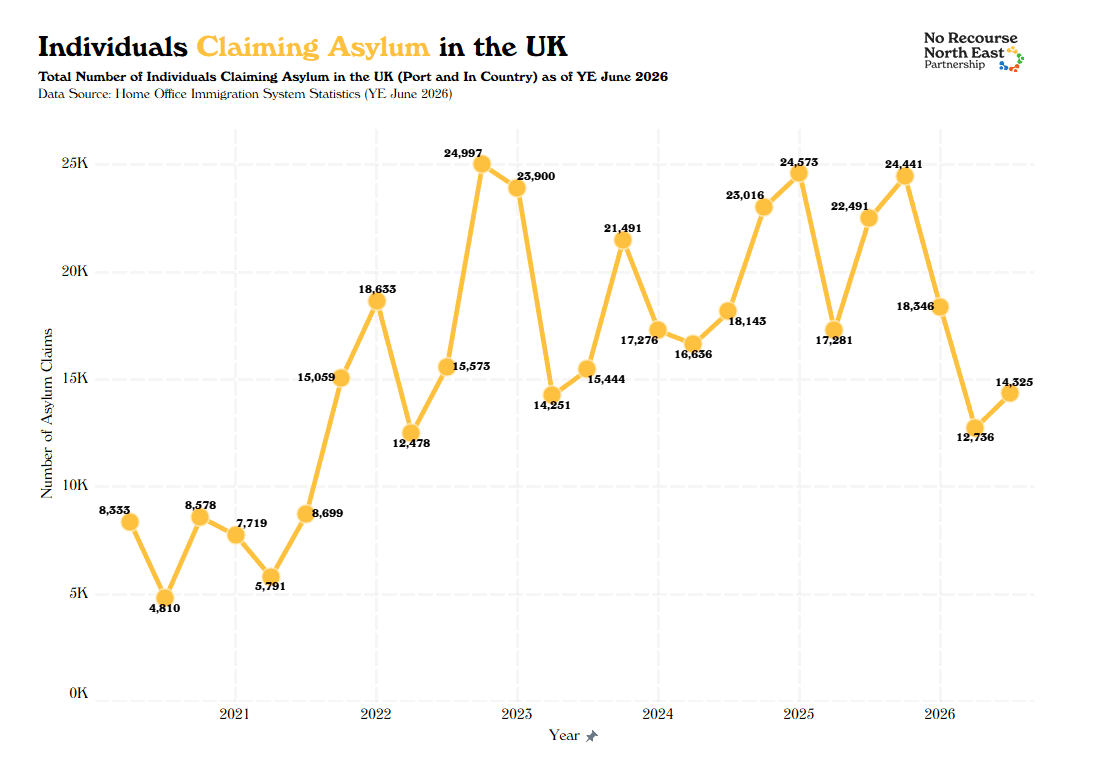
We have yet to see the same level of increase in claims in summer 2026. Since 2021, we have typically seen a ~22% increase in the number of claimants between Q1 and Q2; this year, the increase was just 8%. The most recent data release covers only through the end of June, so proper conclusions can only be drawn at the end of 2026, with the release of data capturing the entire summer, including July and August. Of this population, around 18% are children, down from a decade-high of nearly 25% at the end of 2020.
The most notable and ongoing trend regarding the nationality of asylum claimants is the cratering of claims made by individuals coded ‘Europe other ’, a population primarily composed of Albanians. This is a region that was previously responsible for 1/3 of claims made (Q3 2022) and now make less than 1/20 as of YE June 2026.
Of these claims, we can disaggregate and identify the method of entry for those who later claim asylum. This data shows that irregular entry has fallen from a peak of around 80% of claims (2021–22) to roughly 40–55% more recently, with regular and “other” routes gaining share, which should force us all to contest why the small boats narrative is so pervasive. This may explain the reduced share of children, as it’s difficult for children to regularly migrate to and live in the UK as unaccompanied minors.
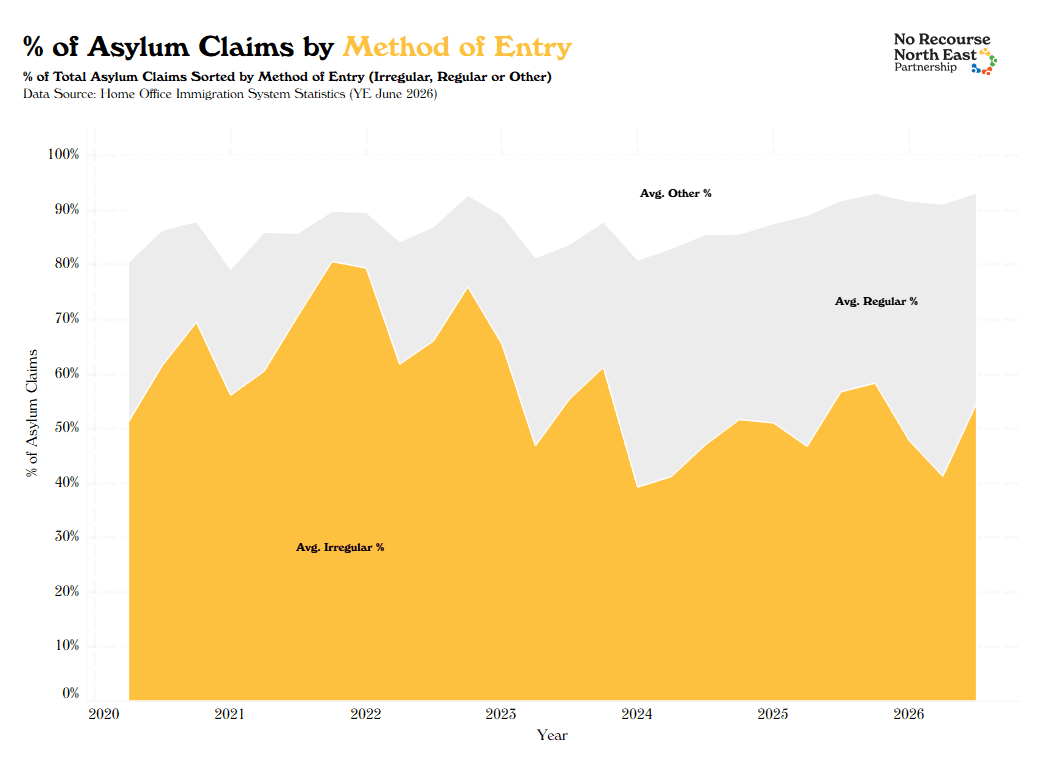
The growing number of individuals who claim asylum after arriving in the country through regular means, for example, as students, was cited as the rationale for the government’s March 2026 “visa brake” policy, which banned certain overseas visa applications from Afghanistan, Cameroon, Myanmar and Sudan.
This left at least hundreds of students unable to study at universities where they were rightly awarded places, for reasons related solely to their passport. A challenge to this policy was brought to the High Court but was ultimately rejected in August.
The rationale in doing so was that it would reduce a potential 1800 asylum claims if held in place for 18 months (~late 2027). Reduce, in this context, means removing the UK’s responsibility to support individuals fleeing conflicts with overt colonial legacies, not providing dedicated safe routes or introducing policy that could alleviate suffering for those 1,800 in their country of origin.
Many will arrive intending to return home when their visa expires. This is particularly prominent amongst student visa holders, of whom around 80% will leave the UK within five years. This is likely the case for the students who were subsequently banned from entering because of the UK’s visa brake; this logic or the lack thereof, was captured well in the Guardian’s article on the policy:
“Ironically, they want to study in the UK not to swell the country’s asylum figures, but so they can develop skills to help strengthen the fragile infrastructure back home, which may help reduce the number of people leaving these countries in future.”
Geopolitical dynamics shift. Seismic changes will emerge during the length of a student visa that fundamentally will change a student’s country of origin, which may leave them with no option but to seek asylum due to a well-founded fear of persecution; case in point: Afghans of all backgrounds, but particularly university-educated women, following the Taliban’s resumption of power in August 2021.
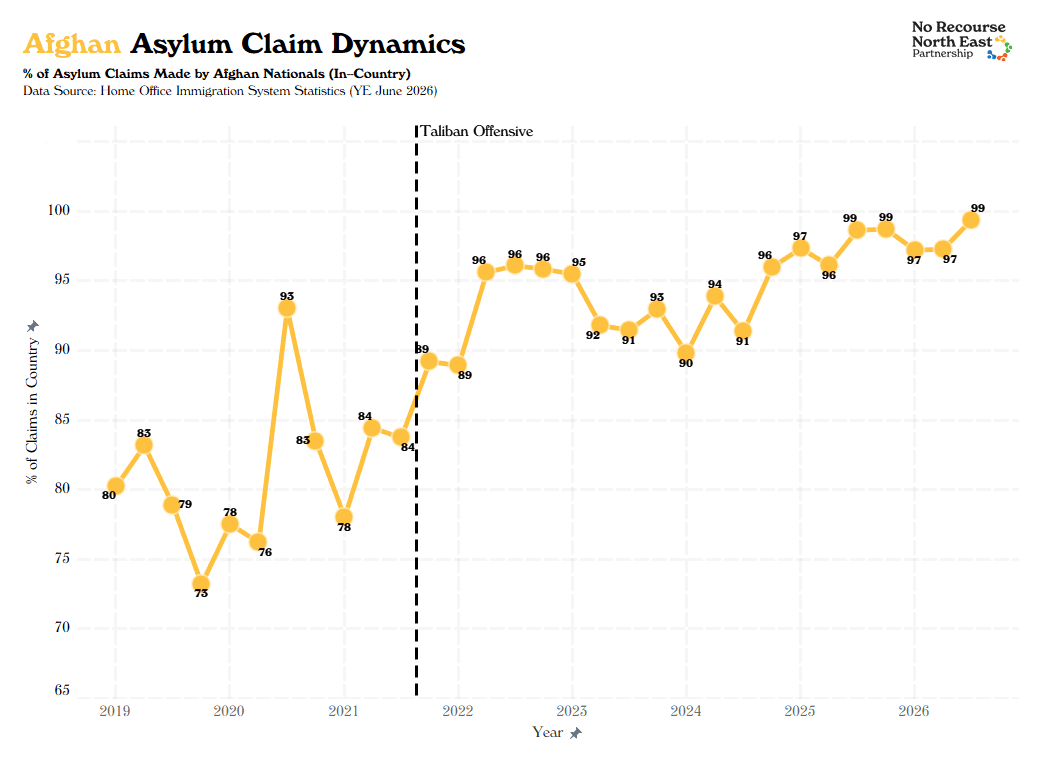
The increased % of Afghan individuals claiming asylum ‘in-country’ rather than at a port (plotted above) suggests these individuals arrived in the UK via another immigration route and that deteriorating conditions at home made returning impossible, or at least very dangerous.
We witness a similar drop in the initial decisions made in YE June 2026 as we saw with total claims, as visualised below. What immediately catches attention when reading this chart side by side with the claims data is how much more volatile initial decision-making has been in comparison to asylum claims, particularly pre-2024.
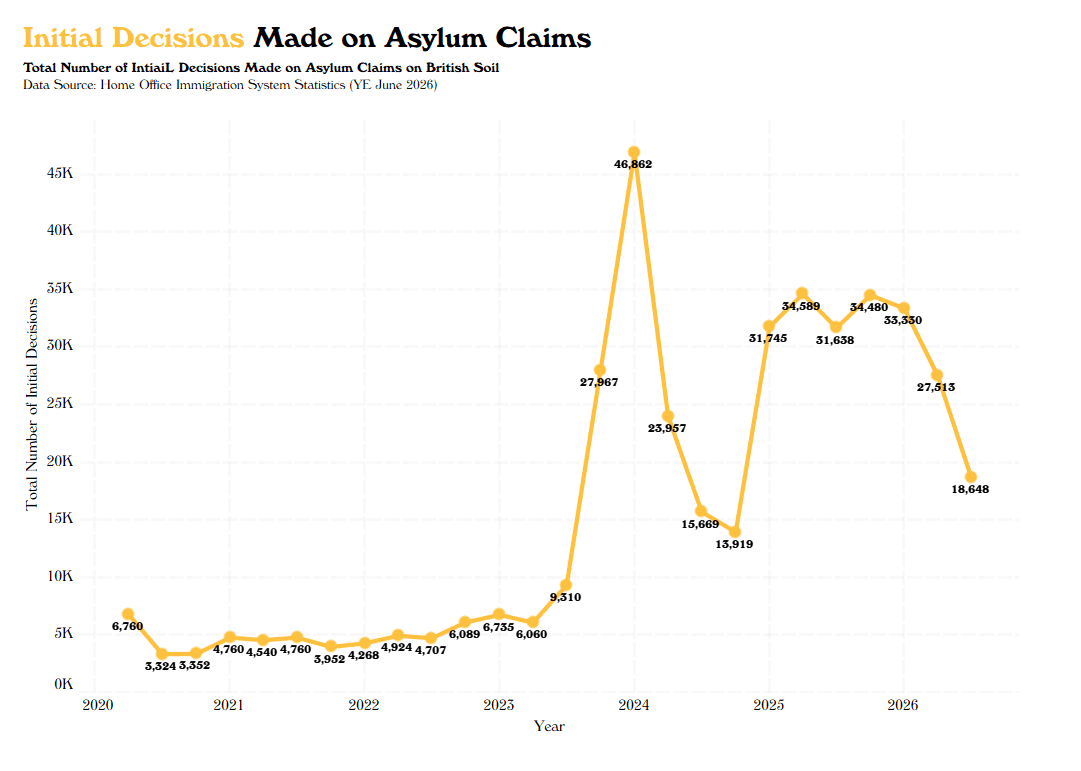
The decoupling of the two led to the growth of a massive backlog throughout the early 2020s, where thousands of individuals were forced to sit idle for months, if not years awaiting a decision on their claim for asylum. This prompted an acceleration of initial decision-making, which became a headline goal of the government in early 2024, cutting the backlog of individuals awaiting an initial decision to 40,168, as visualised below, from a peak of nearly 200,000 in Q2 2023.
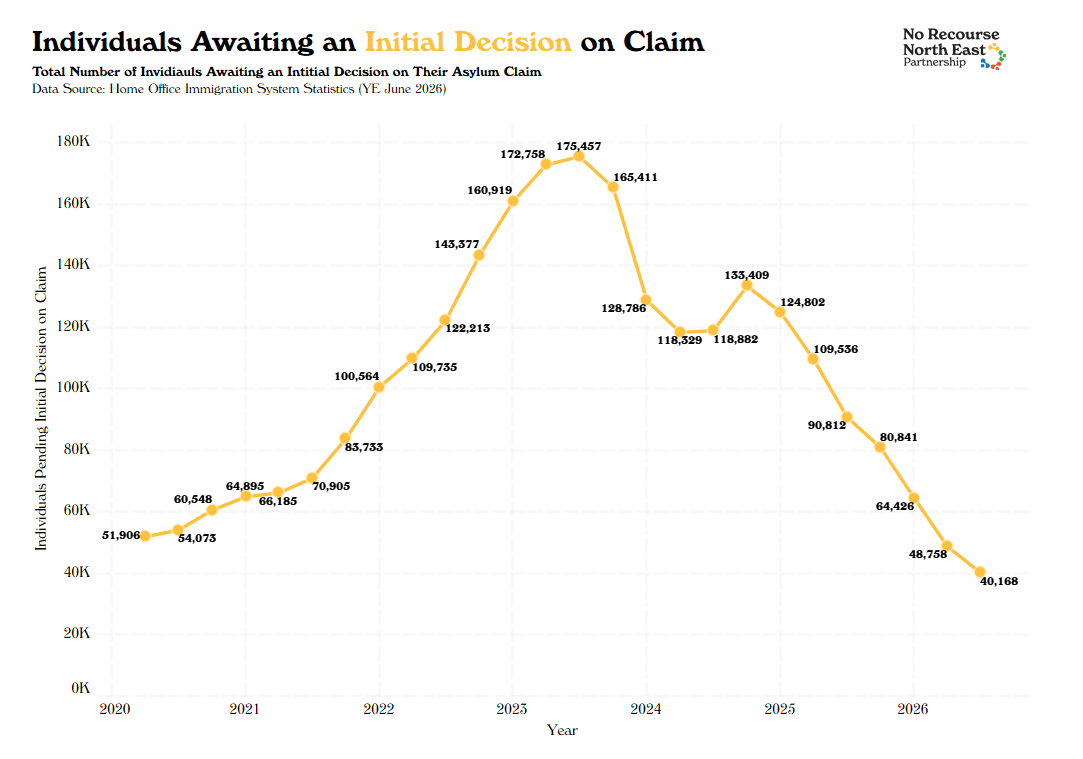
The most recent time that number dipped under 40k was before the backlog became a major policy issue, in YE March 2019 (38,968). This would be a real point of pride if we could say with confidence that the levels and diversity of persecution witnessed around the world had dropped in line, but that is most certainly not the case; with the genocide in Gaza and wars in Ukraine and Iran ongoing, furthermore, the relevance of climate-related displacement is greater than ever as we live through the strongest El Niño in living memory.
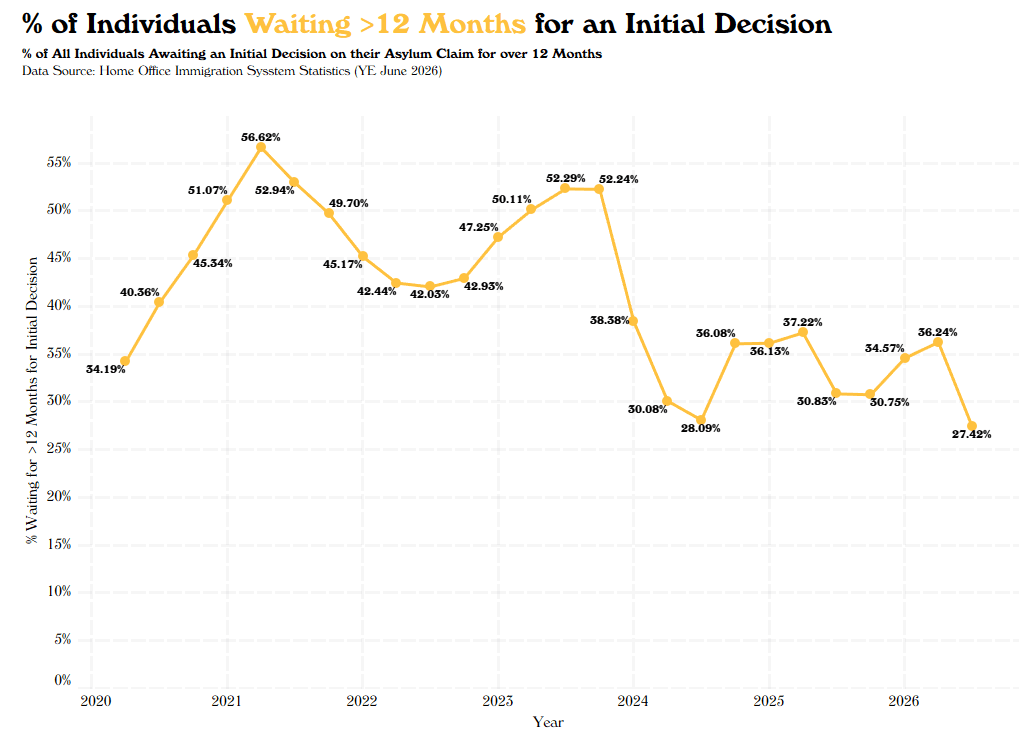
The share of people waiting over 12 months for an initial decision has fallen correspondingly, from a high of 51.07% in 2022 to 36.13% most recently. The importance of this data point is that once an individual has waited over 12 months for an initial decision on their claim, they become eligible to work. Employment opportunities are overwhelmingly limited, with the right to work granted to individuals who receive an offer for a ‘highly-skilled job’ RQF 6+ role as defined by the Appendix Skilled Occupation List. This list excludes occupations such as translators and interpreters, family support workers, and nursing associates.
A high percentage of individuals waiting years for a decision on their claim is problematic for all involved; the progress visualised below is good, so long as it is not achieved because of rushed, watered-down processes that will force individuals to appeal poorly made decisions.
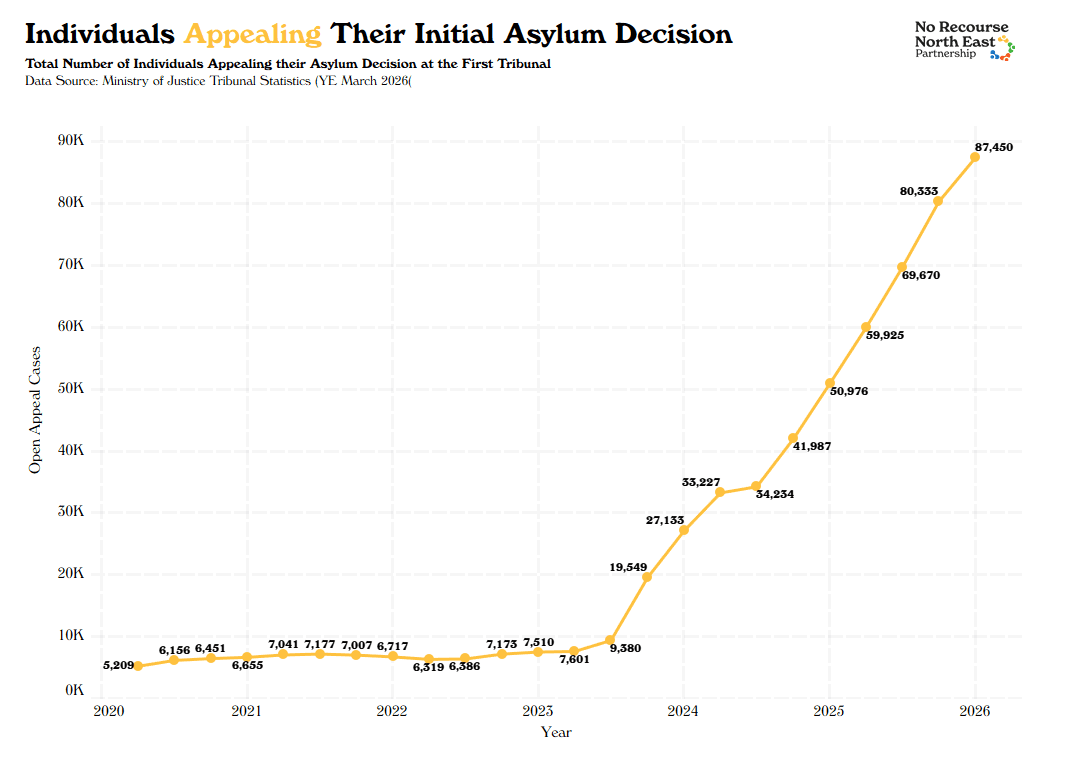
For this progress to be genuine, the backlog of initial decision-making that has troubled the system must have been genuinely addressed rather than displaced elsewhere. This has not occurred, or at least not at the levels required to make the counterfactual in good faith. Almost in lockstep, we’ve seen the reduction in initial decision caseload decrease whilst the number of appeals has increased (visualised below), effectively relocating the problem as opposed to ‘solving it’.
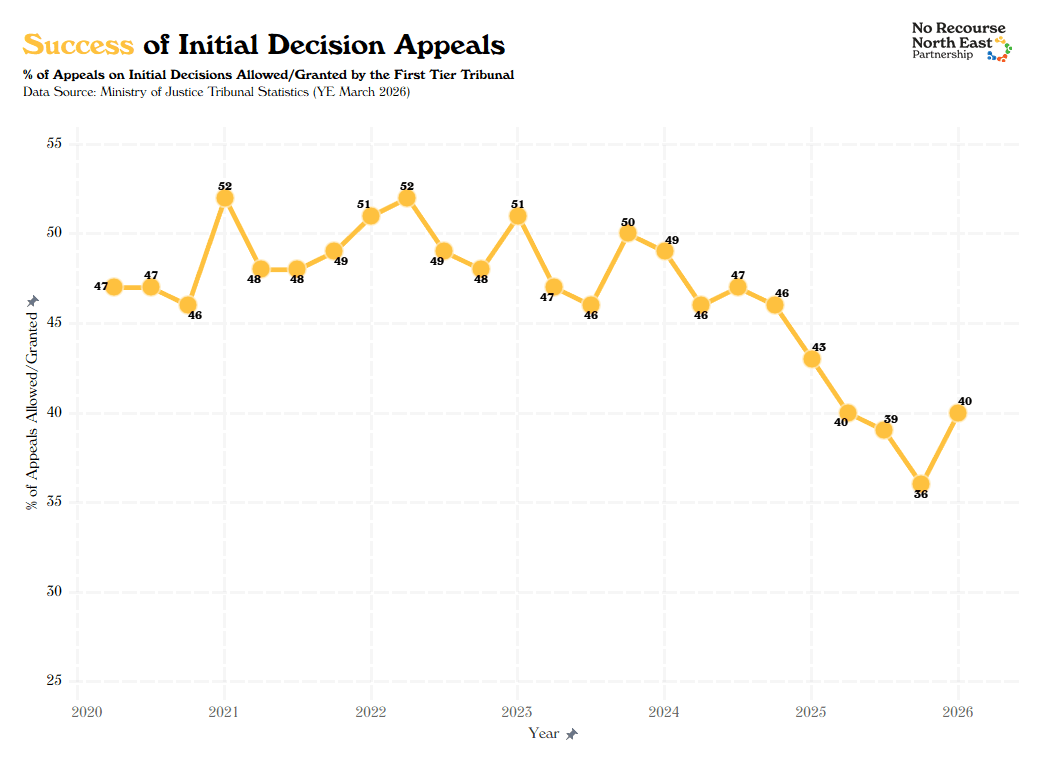
The quality of initial decision-making is well publicised and scrutinised. We have a system where, historically, nearly half of all appeals are granted or allowed. The Refugee Council estimates that poor-quality initial decisions generated £276–331 million in support costs last year for people whose refusals were later overturned or withdrawn, and clearing the current appeals backlog could cost a further £974 million to £1.2 billion in accommodation and support while cases are processed.
This has slowly shrunk, as visualised below, which should indicate improved decision-making quality, but a system in which over 1 in 3 are still wrongfully denied protection cannot be described as anything but broken. We have consistently made this case to anyone who will listen and firmly oppose the proposed measures to address this problem. We argue that, among other things, revamping the appeals system and hiring non-legal professionals to run it, as proposed in the Immigration and Asylum Bill 2026, is a bad idea, as set out in our recent submission to the Human Rights (Joint Committee). You can read a summary of our submission on our website; we will share the full document when we are able
This has coincided with a significant fall in the grant rate. The percentage of individuals granted protection by the UK government has nearly halved since late 2023, visualised below.
This is pronounced for applicants from certain countries, with Syrian grant rates collapsing from 98% to 10% following the fall of the Assad regime. Pakistani rates fell from 46% to 25%, and Afghan rates dropped from 53% to 35% over the same period. The Home Office, through falling grant rates, seems to be treating Iran and Afghanistan as becoming safer, despite an abundance of evidence to the contrary.
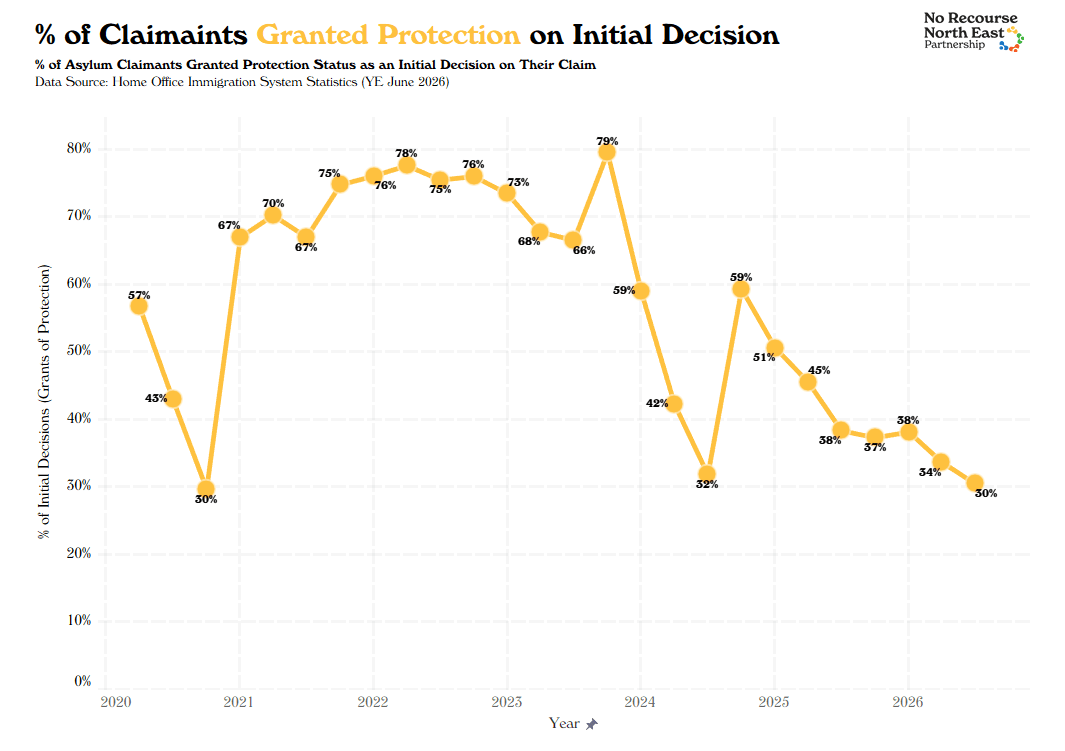
If fewer people receive a positive decision and even fewer appeal, it may be seen as the system working as it should: upholding the strict criteria written into the refugee convention and producing decisions that, while disappointing, clearly explain why to the applicant. Given the externalities that may affect this decision, such as a shortage of legal aid practitioners who are key to making these appeals, it’s uncertain how much of this is ‘good decision-making’ versus structural conditions limiting the ability for individuals to appeal despite wanting to do so, especially in England and Wales where the provision of legal aid for immigration and asylum matters is far more limited than in Scotland.
There is little data that is specific to Scotland. Asylum matters are reserved issues, and much of the data reflects this union-wide approach. We can analyse how and who receive asylum support (NASS) in Scotland.
Roughly three-quarters of people seeking asylum receive support from the Home Office, so this analysis is based on a majority sample and does not account for everyone. This will bias our conclusions toward the most common countries of origin, as there is a pattern between method of arrival, finances, and country of origin. For example, as of YE June 2026, 88% of Pakistanis who claim asylum do so after regularly migrating to the UK, while 86% of Sudanese do so after irregularly migrating; this will have a massive effect on an individual’s material conditions and relationships.
As a reminder, although NASS support and practice are delivered within specific local authorities, the relevant local authority does not fund or deliver them, and accommodation support is outsourced to private companies. To receive support, an individual must generally be destitute or likely to become so within 14 days. Individuals supported in catered accommodation generally receive £9.95 per week, while those in non-catered accommodation receive £49.18.
As of YE June 2026, Iraq is the largest country of origin among those receiving NASS support in Scotland (759 people), followed by Pakistan (557) and Afghanistan (489), visualised below.

Thanks to Sonia Lenegan’s analysis, we know that two of those nationalities, Syria (-88%) and Afghanistan (-18%), are among those whose grant rates have collapsed most dramatically since the end of 2024. The worst-case scenario for all is that individuals from these specific nations face a heightened prospect of becoming appeals-rights-exhausted and, by extension, street homelessness, forced to navigate a legal and third-sector environment that is not funded to be fit for purpose.
As a reminder, asylum accommodation is provided to those who are destitute and seeking asylum on a no-choice basis, so any cluster of nationalities in certain areas is not a result of personal choice or that of the local authority but down to the system itself.
Compared to YE June 2025, Aberdeen City recorded by far the largest increase in supported population of any Scottish authority (+280), ahead of North Lanarkshire (+172) and South Lanarkshire (+126), while Aberdeenshire (-129) and Perth and Kinross (-125) saw the steepest falls.
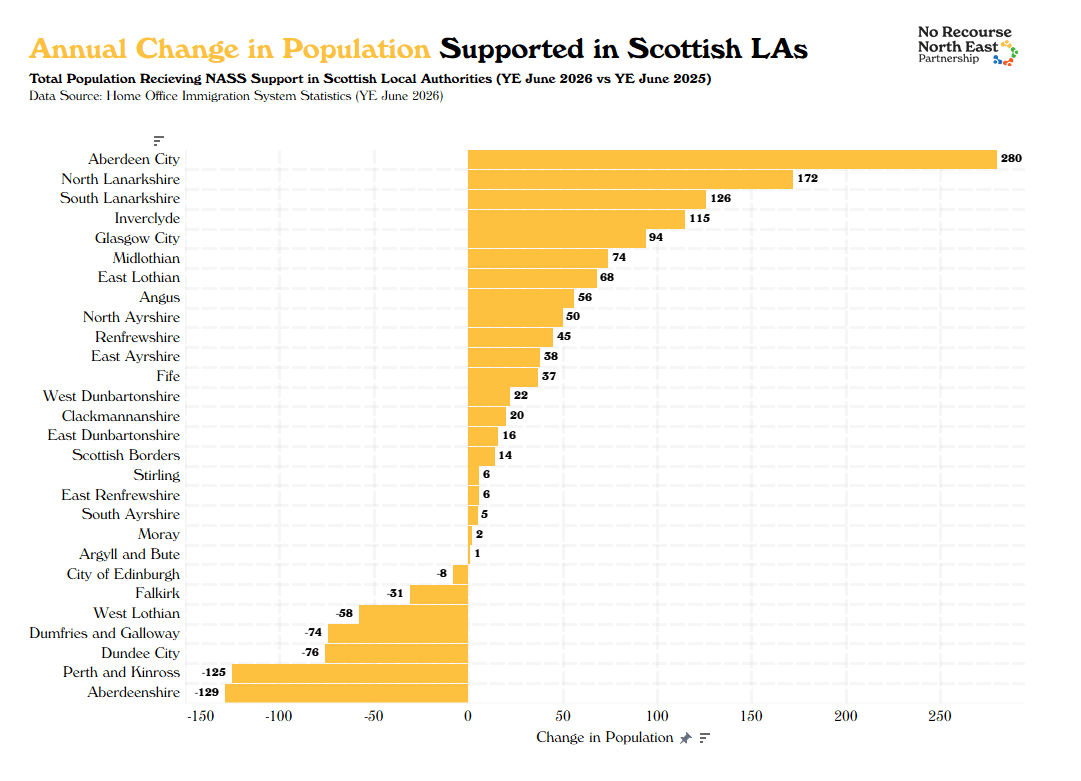
Of those housed in Scotland, a sizeable number remain in hotel accommodation, despite the aggressive reduction in the use of such properties elsewhere, as visualised below. What we can plot below is the number of individuals who are housed in hotels as part of their contingency accommodation; this type of accommodation is used by the Home Office when standard initial or dispersal housing is full and makes up for the vast majority of hotel bedspaces used in the asylum system.
Individuals may also be housed in hotels in other scenarios, for example, as initial accommodation; however, that data is not captured, so this may not provide a ‘full’ picture of hotel use.
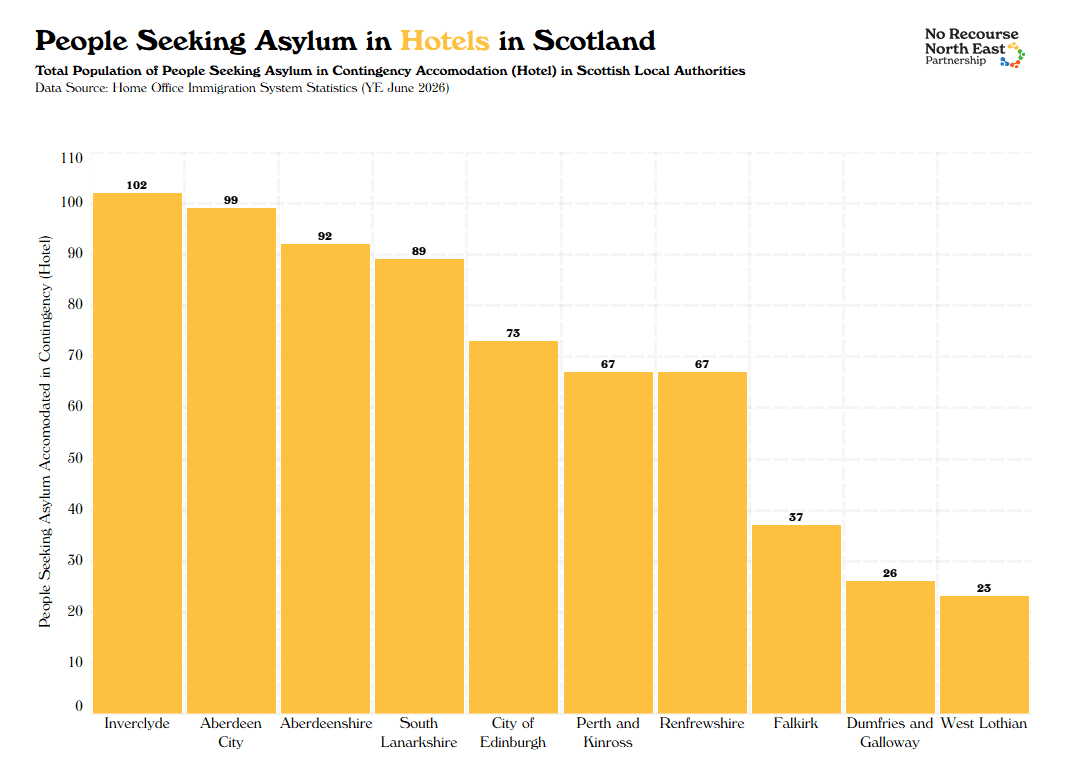
The use of hotels to house people seeking asylum is problematic for many reasons; not least the exorbitant costs they demand – hotels cost at least six to ten times as much as HMO housing, and the average annual accommodation cost per person rose from £17,000 in 2019/20 to £47,000 in 2025/26.
These costs translate directly into profits for the private contractors who manage the hotels, who made £146 a minute in profit between 2019 and 2024 from the ‘Asylum Accommodation and Support Services Contract’ alone.
In the 2010s, Aberdeen City hosted a handful of people seeking asylum, never breaking into double figures. The population of people seeking asylum in the North East has increased rapidly since the UK government entered a “full-dispersal” model in mid-2022.21 Since then, the North East’s supported population has grown from roughly zero in early 2022 to a peak of almost 1,200 in late 2025, before easing back to 900–950 by mid-2026, roughly in line with the national trend. This modest recent pullback likely reflects, with a lag, the same national cooling in claim volumes described earlier.

Aberdeen City accounts for the large majority of this total, with Aberdeenshire a distant second as visualised below.
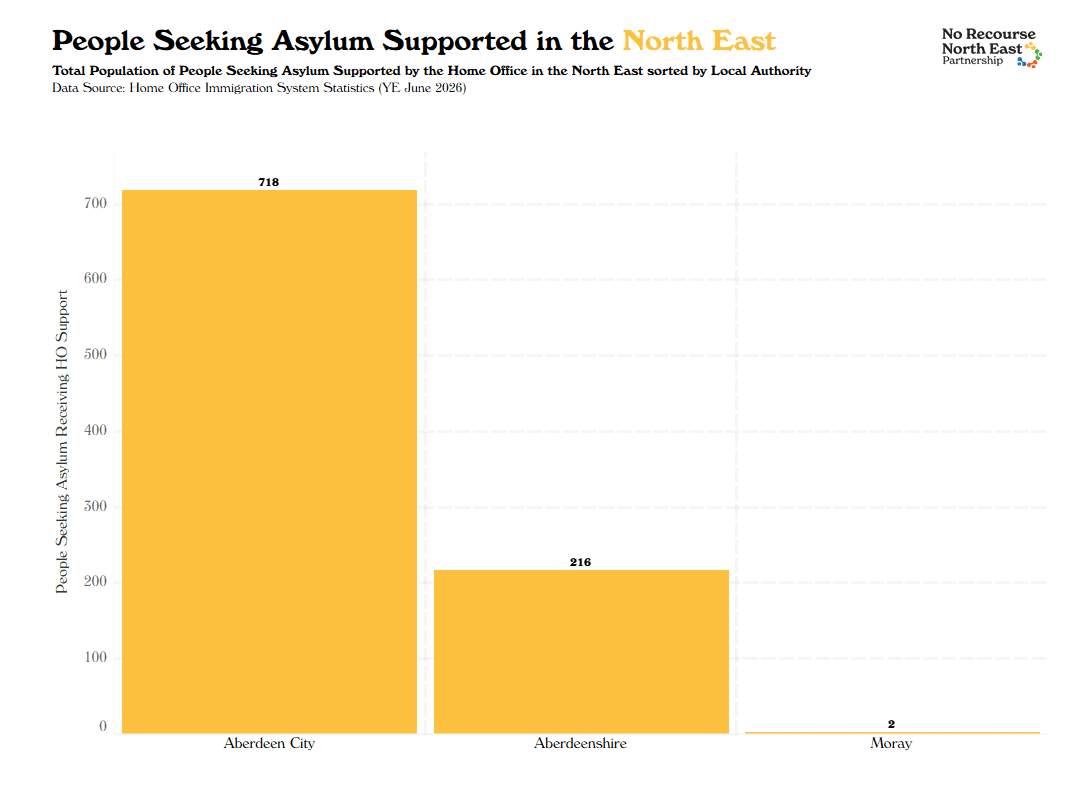
In total, the North East accounts for roughly 14% of the national total, with Aberdeen City housing 1 in 10 people seeking asylum supported by the Home Office in Scotland, a very distant second to Glasgow, where 57.5% of people seeking asylum are housed.
If the Home Office were genuinely interested in reducing these numbers, it would liberalise the right to work for those stuck in the asylum system, in line with the European ‘average’ of six months. The financial logic of restricting work while simultaneously proposing to claw back support costs does not hold up. Modelling by the Center for Global Development suggests that permitting people to work six months into their claim would be worth roughly £294 million per cohort, more than three and a half times the estimated yield of the government’s proposed repayment charge, once savings on accommodation, additional tax revenue, and avoided long-term ‘scarring’ effects on employment are accounted for
Of the nearly 1000 supported in the North East, the overwhelming majority are supported via Section 95 of the Immigration and Asylum Act 1999. Section 95 support is available for people and dependents who are destitute or will become so in the next 14 days, while they are waiting for a decision on their claim or appeal. Section 95 support usually follows weeks or months of Section 98 support, which provides initial accommodation for those who have just entered the system. Given the distance between the North East of Scotland and the primary ports of entry in the South East of England, the small proportion of individuals receiving Section 98 support is expected.
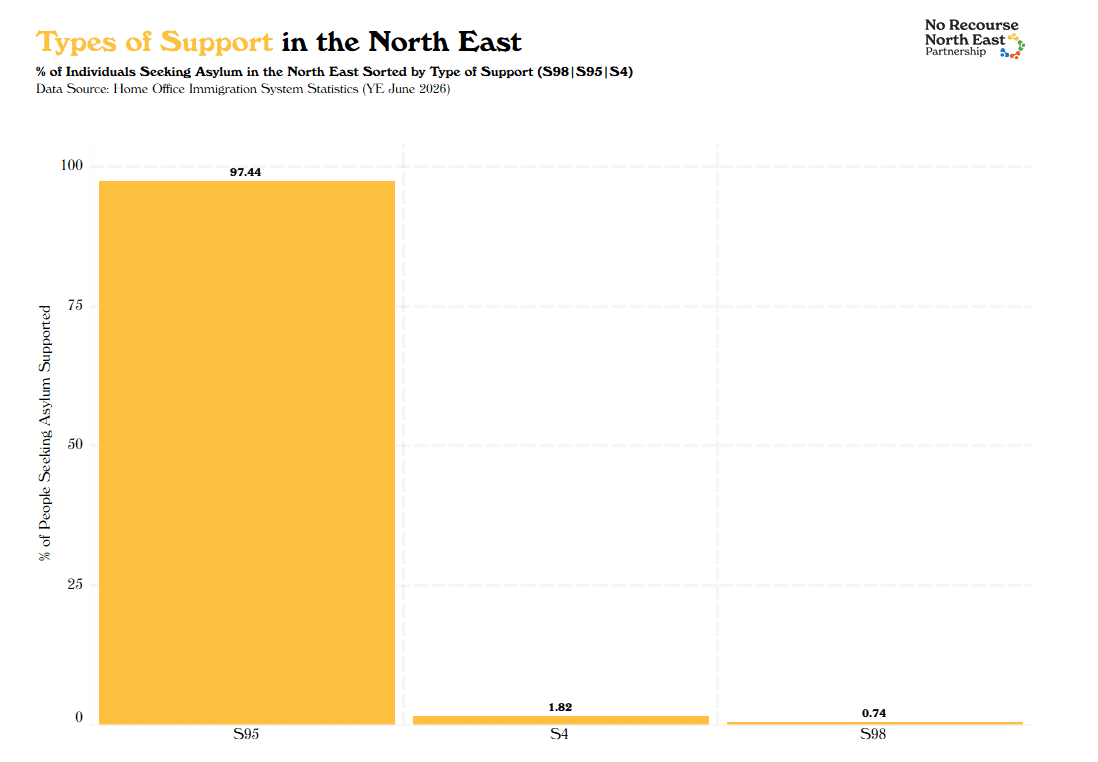
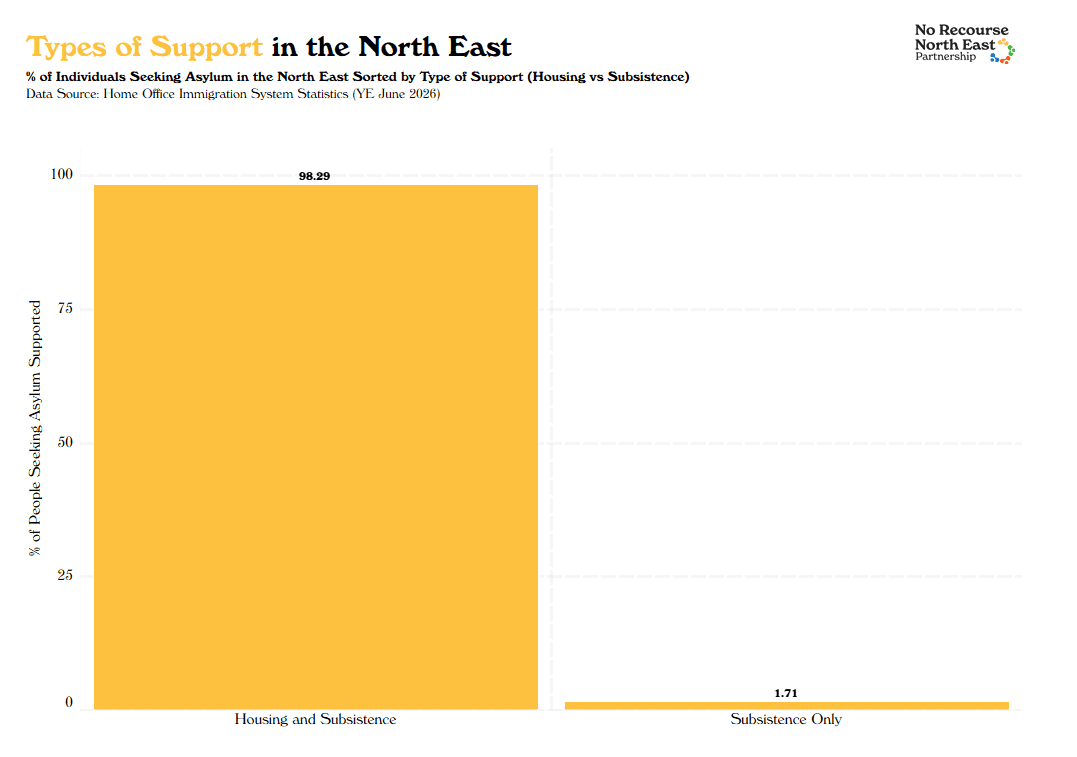
Correspondingly, 98.29% receive full housing and subsistence support rather than subsistence support only. Although Aberdeen is a very international city, it is not surprising that those who have been randomly moved to the city may lack the relevant support networks to avoid the destitution threshold established for state support, which may be present in cities like Glasgow, Manchester or London.
Given that appeals now take an average of over a year to resolve, and the appeals backlog has grown to 87,450, the local demand for advice, representation, and continued accommodation support will persist well beyond the point at which initial decisions are made. If anything, high-quality legal advice becomes even more important as individuals now overwhelmingly enter the appeals arena to dispute their initial decisions.